

A trip catalogue the team can finally run themselves
We migrated One Tribe from a locked platform to WordPress with a custom theme and panel — with automatic trip numbers, new search and a fully reworked mobile experience.
Seven views from the finished site. Click to see a larger one.
Home pageDestination carousel and search in one view — choosing a trip starts on the first screen.Trip catalogueSearch by name, country or ONET number, sorting, extra filters and three view modes.Trip pageTrip number under the title and in the facts bar: type, price, duration, destination, difficulty, dates.Trip cardsEach card — badges, duration, dates, difficulty, remaining places and discounted price.Combine a tripRental, kit list and a gift card inside the enquiry — no separate email thread.Destinations map48 countries on an interactive map — explore by place, not only by date.How it worksFour steps from the first question to the group start, and the team behind the trips.
Client
One Tribe
Industry
Adventure travel
Service
Website development · platform migration
Platform
WordPress — custom theme and panel
Year
2026
Status
Ready to launch
The challenge
The catalogue grew faster than the platform
One Tribe takes groups to more than 48 countries, but the site lived on a locked platform where the content team could change almost nothing. To add a new departure date, in practice a new page was created — still visible in the old URLs japanas-ekspedicija-3, -6, -8: the same trip split into separate records.
That had two consequences. First, no trip had a stable number — not for the customer in a conversation, not for the team internally, not on the invoice. Second, the marketing team could not work with SEO: the platform did not let them manage titles, descriptions, keywords or body copy the way modern search requires.
The old site was not bad — it already had filters and trip cards. The problem was that the catalogue grew faster than the platform could carry it, and each new date added to the chaos.
Before and after
Trip catalogue
PirmsPēc
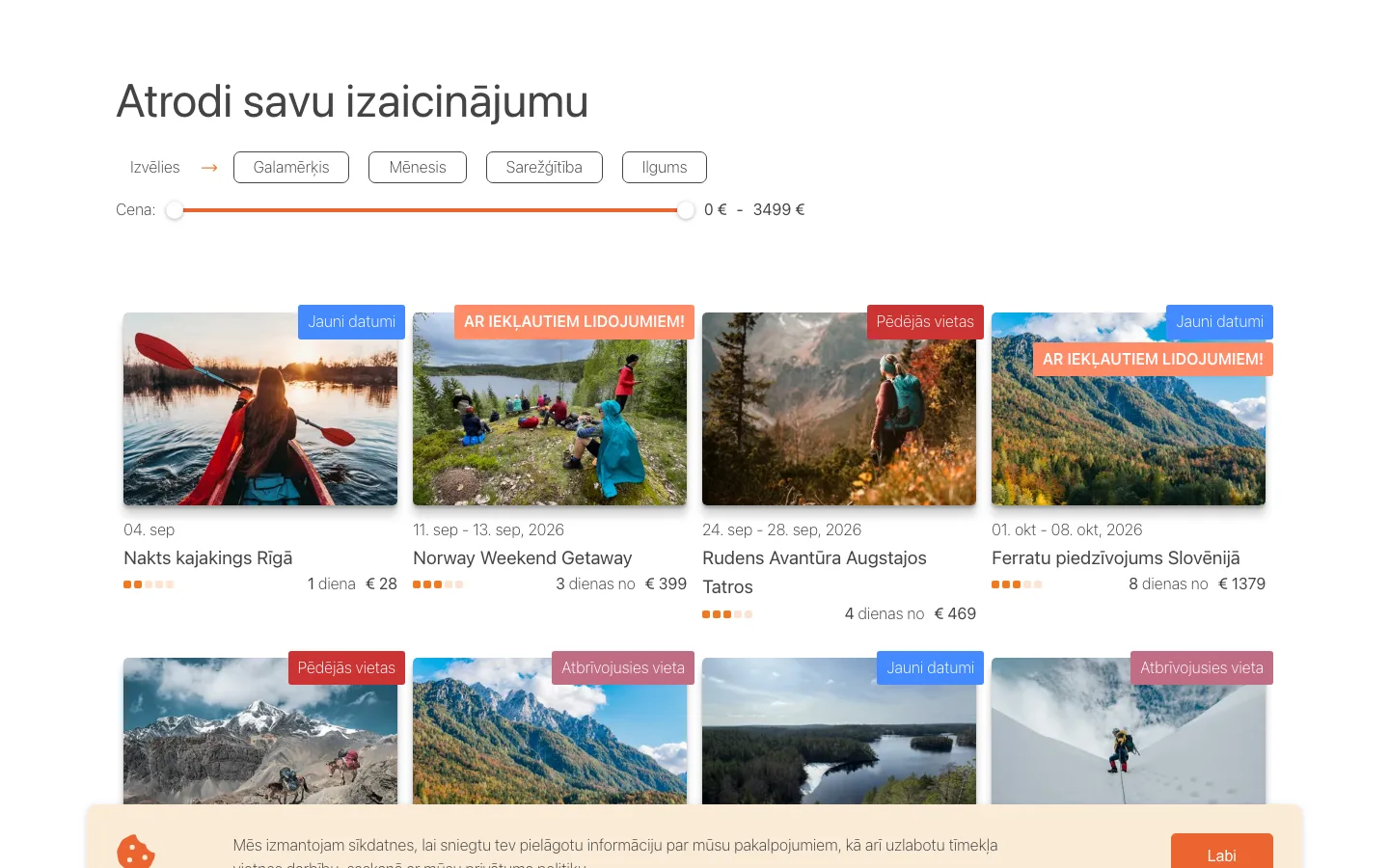
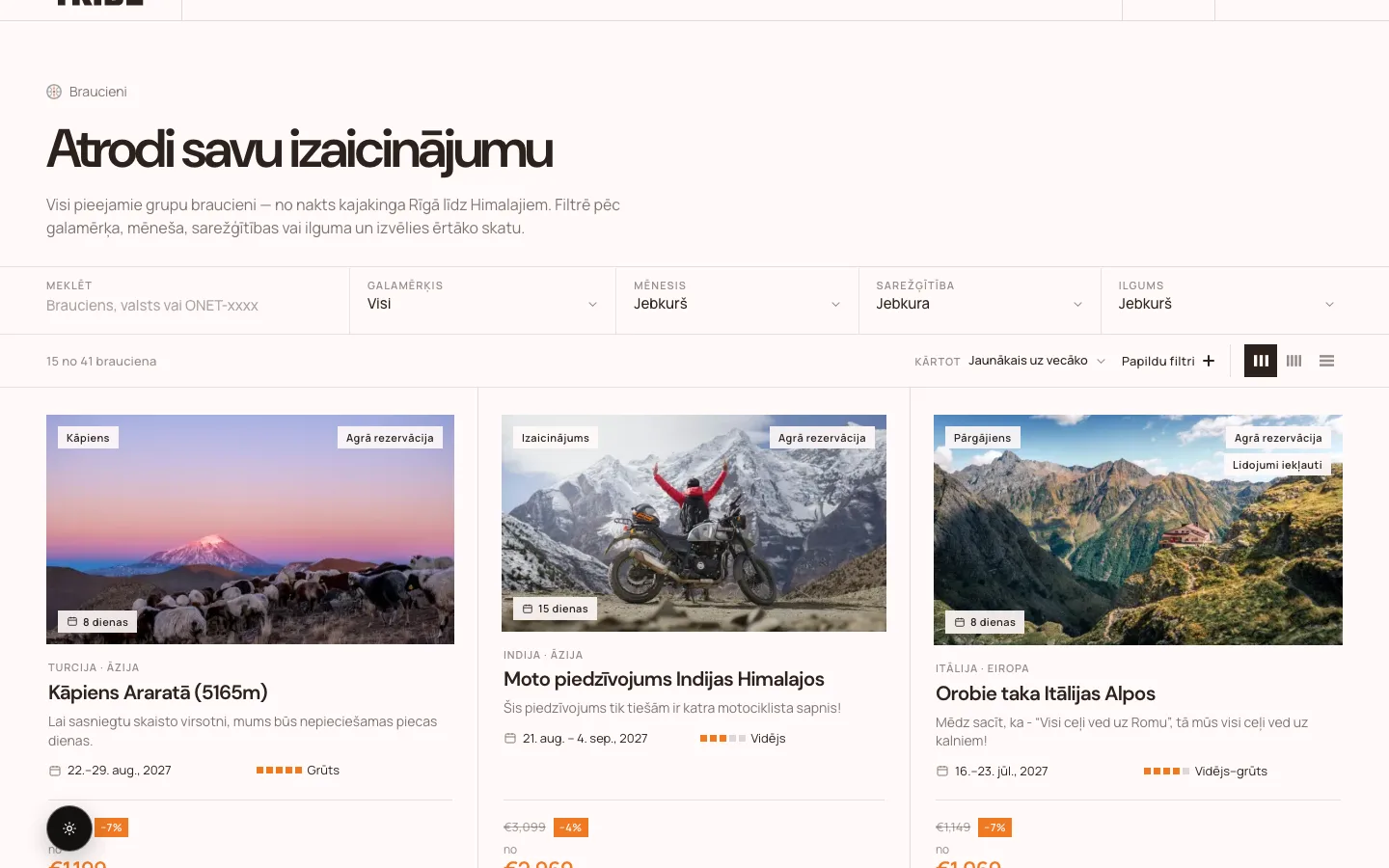
Drag the slider to compare. Trip catalogue: before — four filters and a price slider; after — search by ONET number, sorting, extra filters, result count and three view modes.
What we did
Eight workstreams
Automatic trip numbers
Every trip now gets a number automatically, the moment it is created. The number is visible on the trip page, in the enquiry form and in the list, and you can search the catalogue by it. The customer says the number in a conversation — the team knows at once which departure it is.
Brauciena nr. ONET-0049
Search that finds by number, country or name
Catalogue search accepts a trip name, a country or an ONET number. Alongside that — destination, month, difficulty and duration, extra filters for price and trip language, and badges for “Last places”, “Flights included”, “New dates”, “Early booking”. The result count is visible immediately, and the list can be sorted.
Three view modes for one catalogue
People search differently: one browses pictures, another compares dates and prices. So the catalogue has grid, compact and list views — the same data set, three ways to read it.
Migration to WordPress with a custom theme and panel
We moved all the content to WordPress and built a custom theme and admin panel specifically for trips: dates, prices and discounts, difficulty, group size, remaining places, included services and galleries. The content team now adds a trip without a developer.
SEO the marketing team can finally run themselves
Titles, descriptions, URLs and body copy are in the team’s hands. Each trip is one record with its own dates — not ten nearly identical pages competing with each other in search.
Micro-interactions and animation
Opening filters, card states, gallery transitions, the map and view switching — every action responds at once and clearly. The goal was not effects, but the feeling that the site reacts: browsing trips becomes pleasant, not merely possible.
Mobile and desktop as two full views
On mobile, filters, cards and the enquiry are designed separately, not squeezed from the desktop version. On desktop we use the wider screen — more comparison in one view, a side panel with price and enquiry that stays visible as you scroll.
Brand personalisation
The One Tribe compass mark lives throughout the interface — in icons, badges, map markers and small accents. The site looks like One Tribe, not a template with a logo stuck on.
The result
What works differently now
Every trip has a stable number used by the customer, the team and documents
A new departure date no longer needs a new page
The catalogue can be searched by number, country or name, and sorted
Content and SEO changes happen without a developer
One data set, three view modes and a destinations map with 48 countries
A trip page can be saved as a PDF or continued in WhatsApp
The mobile experience is built separately, not scaled down from desktop
The site is not publicly live yet, so we deliberately do not show traffic or conversion figures here. We will add them once the first full season cycle has run.
“Klients bija patiesi pārsteigts par gala rezultātu.”
One Tribekomandas atsauksme — aizstāt ar citātu pirms publicēšanasVisi darbi
How a project starts
Three steps to a proposal
No long intro. Usually one conversation is enough to understand scope and timing.
Tell us the goal
Enquiries, sales, speed or automation. A short note is enough.
A short consult
Goal, audience and what you already have. Usually one conversation.
Proposal
Scope, timing and the next step — before we write code.
Thank you! You’re subscribed.
You’ve been added to the newsletter. No spam — just useful updates.
Closes in15 s
Pagaidiet… Bezmaksas CRO audits
Ja jums ir mājaslapa, lai saprastu, kas strādā un kas nestrādā, labākais pirmais solis ir CRO audits. Bez prezentācijas — tikai konkrēti secinājumi.
CRO
CRO vietnes audits
Redzam, kur vietne zaudē klientus — lapa pa lapai.